

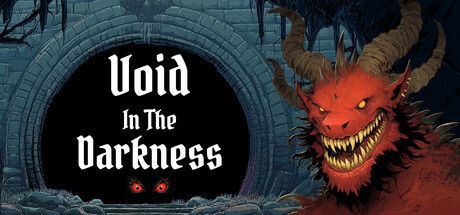
Void In The Darkness
هل جهازي يشغل لعبة Void In The Darkness
اعرف ما إذا كان جهازك قادرًا على تشغيل هذه اللعبة من خلال مراجعة الحد الأدنى والمتطلبات الموصى بها بالأسفل.
تفاصيل اللعبة
الحد الأدنى من المتطلبات
المتطلبات الموصى بها
وصف اللعبة
Introduction
Immerse yourself in a grim world of dark fantasy where every match is a duel of wits and calculation. You do not command an army — you command a deck: four unit cards, a set of attack and defense cards, and a grid along which a deadly procession unfolds.
Gameplay
Core idea
The player controls a deck of cards in turn‑based battles on a grid‑based board. At your disposal are four unit cards, attack cards, defense cards, and effect cards. Summon units, cast spells, and employ tactical maneuvers to break through enemy ranks and reach their leader.
How a turn works
At the start of a turn you play cards from your hand: summon a unit to a starting cell, attack an enemy unit, or apply a defensive/effect action. Summoned units move only forward along their lane; when they collide with an enemy unit they deal damage. Each unit performs one attack per turn. The objective is to traverse the grid to the cell containing the enemy leader and destroy them.
Balance and asymmetry
The enemy usually has numerical superiority in units. The player compensates with flexibility: in addition to summons there are direct‑damage cards, defense cards to preserve key units, and effect cards (pushback, buff, debuff, etc.). Tactical decisions matter more than numbers: the correct order of card plays and positioning determine the outcome.
Examples of tactical scenarios
Sacrificing a summon card to place a blocking unit, then using an attack card to eliminate a key enemy squad.
Applying a defense card to a weak unit so it survives an attack and then strikes back.
Using a movement card to alter the trajectory of enemy units and create a corridor for your forces.
Features
Asymmetric battles — the player has only 4 unit cards against numerous enemies.
Flexible deck — in addition to summons there are attack, defense, and various effect cards.
Grid‑based field — positioning and movement across cells decide the outcome.
One attack per turn — every action carries weight and cost.
Replayability — different card combinations and tactics lead to new scenarios.
Conclusion
A game for those who value cold logic and a grim aesthetic: here numbers do not decide everything, but the ability to squeeze the most out of every card. Break through the enemy ranks, use guile and calculation — and let your leader be the last one standing.