


The Neeblarium
Can my PC run The Neeblarium
Find out whether your PC can run this game by reviewing the minimum and recommended requirements below.
Game Details
Minimum Requirements
Recommended Requirements
Game Description

The Neeblarium is a calm, living simulation about cultivating tiny digital creatures called Neeblies and deciding what’s worth preserving. You don’t control Neeblies directly. You shape conditions, observe what emerges, and intervene only when it matters.
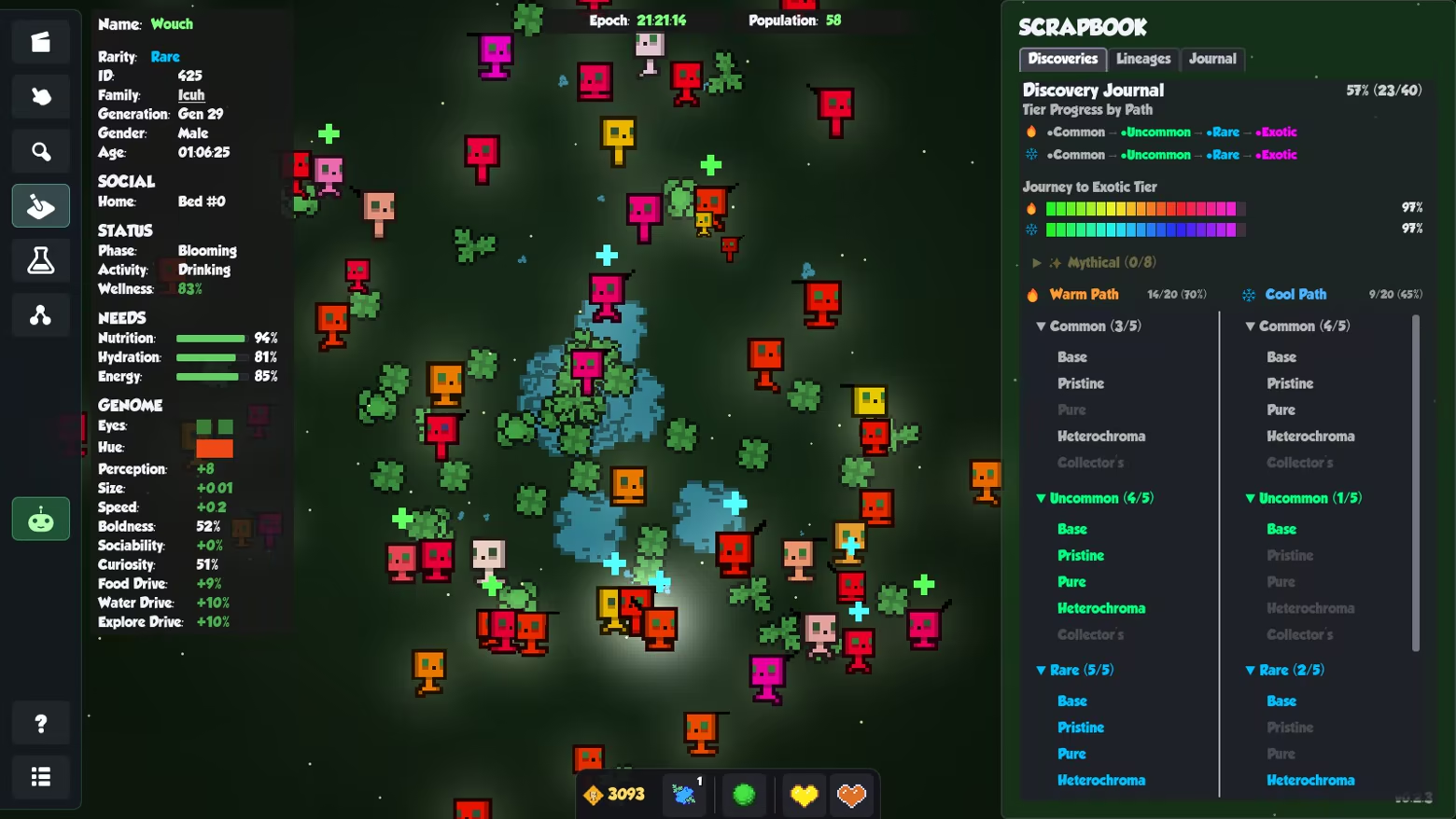
Over time, families form. Lineages diverge. Rare traits appear. Some discoveries are fleeting. Others are worth saving.
Use your Lab to capture traits you’ve discovered and reintroduce them as new founders. Run multiple biomes as experiments, each telling its own quiet evolutionary story.
The world keeps moving whether you act or not.
An artificial life sim about attention, care, and making something last.
Your role in The Neeblarium:
Establish conditions for life within a running ecosystem
Introduce eggs and observe Neeblies grow, adapt, and reproduce on their own
Watch families form and lineages diverge across generations
Notice mutations, rare traits, and subtle behavioral differences as they emerge naturally
Use a Lab to preserve discovered traits and reintroduce them as new founders
Run multiple biomes in parallel, each evolving independently over time
Decide when to intervene, curate, or simply let things run
Your choices shape long-term outcomes, but the system never demands constant micromanagement.
You can be hands-on, or almost completely hands-off.
The simulation doesn’t demand constant input — but it does reward attention.